News
Prescribed Fire In The Rainwater Basin
June 26, 2026
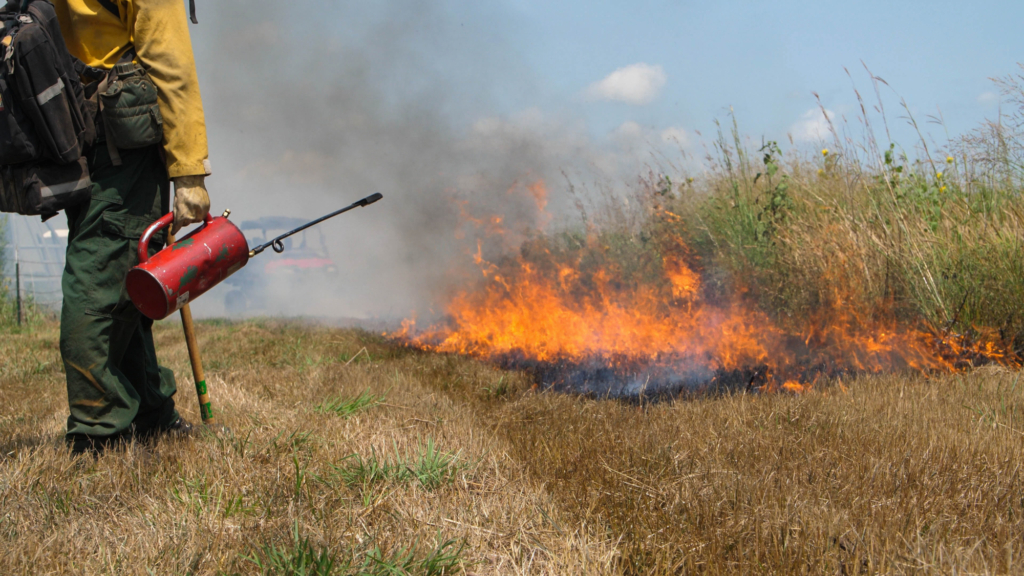 The Rainwater Basin Joint Venture (RWBJV) has programs and dedicated staff that promote wetland and grassland management across public and private lands. These opportunities include grazing infrastructure, herbicide application, tree removal, as well as prescribed fire. Nebraska’s mixed grass prairies, as with grasslands across the Great Plains, evolved with dynamic conditions and disturbance. Climate extremes, large-scale movement of grazers such as bison, and widespread fires created a patchwork of vibrant wetland and grassland vegetation communities. It is estimated that grasslands in the Great Plains experienced a fire event every 1-10 years. Many of these fires were caused by lightning, and some were caused by Native Americans to attract deer and bison. These fires helped promote native grasses and forbs, improving forage quality for livestock, controlling invasive woody species, and reducing wildfire risk. Today, the prevalence of wildland fires has greatly decreased due to widespread fire suppression.
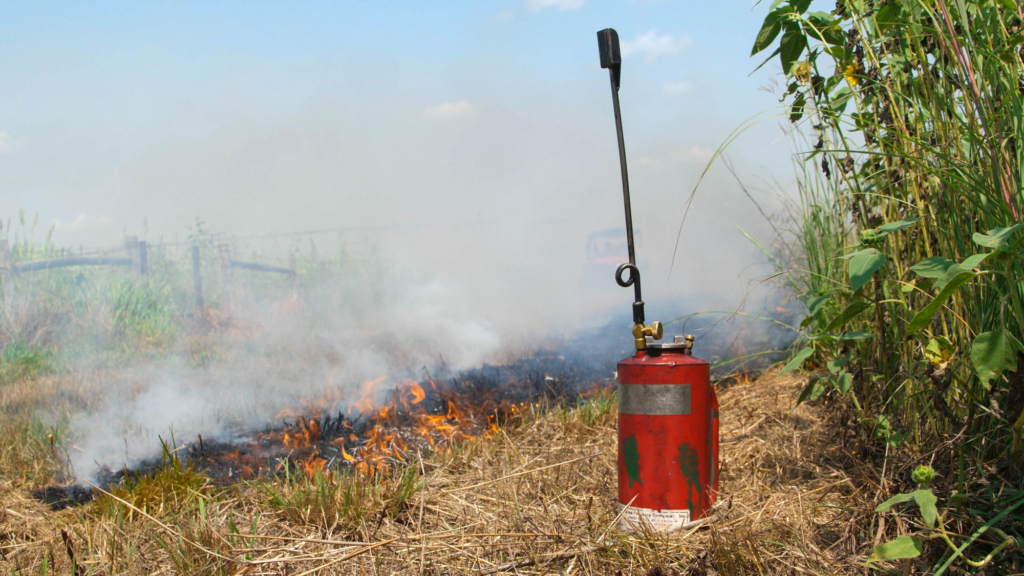
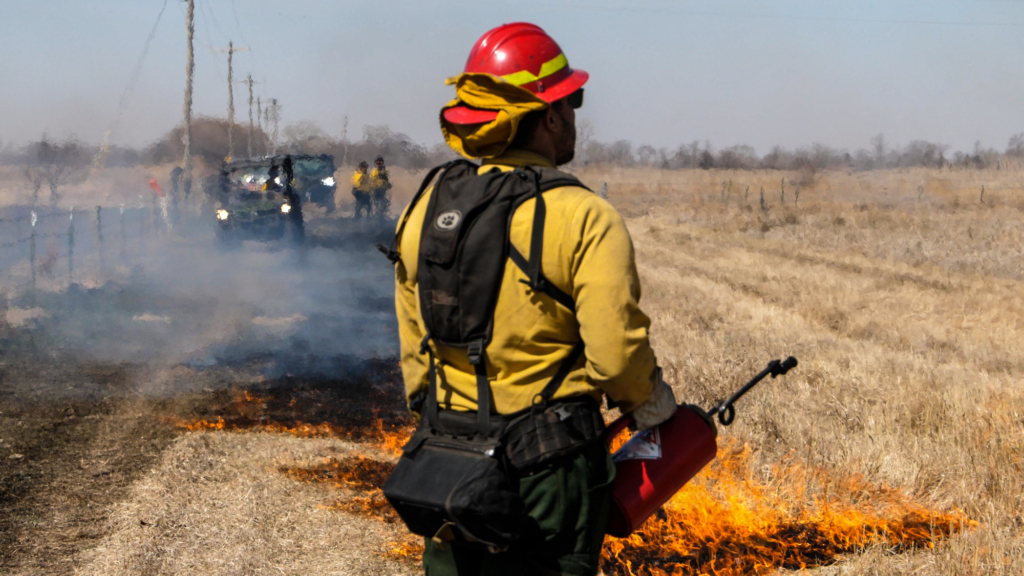
When used properly under controlled conditions, fire can be incredibly important management tool. For example, prescribed fire is used on playa wetlands in the Rainwater Basin to control encroachment by Eastern Red Cedar as well as other invasive plant communities like reed canary grass, cattail, and river bullrush. These plant communities choke out native, moist soil vegetation that provide essential seeds for migratory waterfowl. The benefits from fire are best shown when paired with other management techniques like grazing, herbicide application, and mechanical removal of woody species.
In 2025, the RWBJV contracted with two crews to support prescribed fire on 3,500 acres across the RWBJV geography. This year the RWBJV has contracts with three fire crews to burn 4,500 acres of private lands and 4,500 acres of public lands.
To ensure these burns are effective and low risk, the RWBJV removed trees on several of the properties and mowed firebreaks (30ft wide) on 1,500 acres. The RWBJV also contracted the development of burn plans for the private land sites. Burn plans are an important element of safe and effective prescribed fires. Prescribed fire specialists are an invaluable resource for landowners who want to implement fire on their properties but are not sure where to begin. The specialist can work with the landowners to plan the initial burn as well as follow-up burns. This builds trust with private landowners, and over time, RWBJV partners have demonstrated that prescribed fires can be safely integrated into private lands operations.