
Regional Conservation Partnership Programs
Growing and Expanding Nebraska’s Grassland Cores is a multi-year Regional Conservation Partnership Program. This program is designed to proactively address woody encroachment—particularly eastern red cedar—across Nebraska’s priority grassland cores identified through NRCS’s Great Plains Grassland Initiative. Through this effort, approximately $18.8 million in NRCS funding will be delivered to landowners to implement targeted grassland management practices on more than 90,000 acres statewide.
This RCPP is designed to streamline project implementation and reinforce the Great Plains Grassland Initiative (GPGI) emphasis on sustaining core grasslands. This approach focuses on addressing encroachment before tracts are overtaken by eastern red cedar and follow-up management to address new encroachment or re-infestation. Follow-up treatments ensure lasting success. The program prioritizes grasslands based on canopy cover and ecological condition, allowing partners to efficiently enroll producers and match treatments to site-specific needs. Eligible practices include Brush Management, Prescribed Burning, Grazing Management (deferment), and Pest Management Conservation Systems, with cost-share and incentives structured to encourage long-term maintenance of tree-free grasslands. A centralized online mapping portal supports partner-led site assessments, compliance screening, and practice design.
Available statewide, this RCPP focuses implementation within GPGI priority areas plus the Central Loess Hills. Priority enrollment eligibility is determined by a combination of factors, including encroachment risk and commitment to follow-up treatments. All grassland tracts in the USDA system have been categorized by canopy cover:
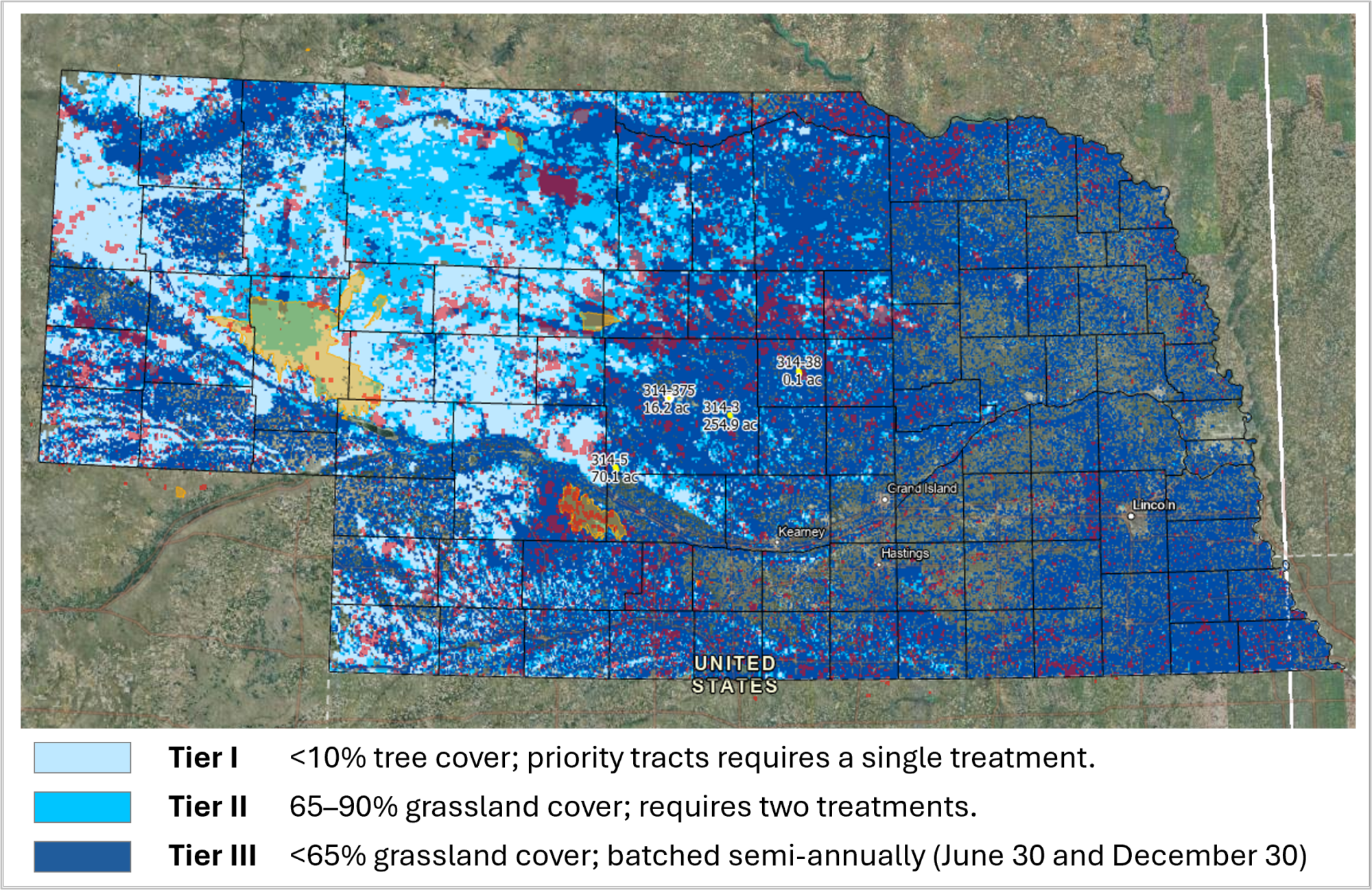
Special Considerations: Self-certified Historically Underserved participants will be elevated to Tier I, as will tracts adjacent to recent woody encroachment projects (within 5 years). Both will require follow-up treatments. RWBJV partners will promote the program to eligible landowners with Tier 1 and 2 tracts by sending postcards highlighting benefits to birds and producers.
RWBJV partners will promote the program to eligible landowners with Tier 1 and 2 tracts through postcards and letters highlighting benefits to birds and producers.
This webpage serves as a hub for the documents, tools, and guidance needed to consistently implement the program, coordinate with landowners, and ensure project success.
Participation in the program is voluntary, and applications are accepted on a continuous basis. Landowners interested in enrolling are encouraged to contact the Rainwater Basin Joint Venture RCPP Coordinator, Laura Rubeck, by email at laura.rubeck@audubon.org.
- 2550 N Diers Ave Suite G
Grand Island, NE 68803 - 308-382-8112
© 2026 Rainwater Basin Joint Venture
